Showing posts with label How Plants Work. Show all posts

Thursday, December 25, 2025

Native Plant Seed Germination: Some Resources

A display of seeds of smooth rose, cup plant, ironweed, and Culver's root.


There's something deeply satisfying about growing plants from seeds. More than cuttings or divisions, seeds hold the promise, or at least the potential, for new life. 

Most seeds packaged for sale in retail stores are easy to germinate. They might take a week or more to emerge, but they don't require special treatment other than adequate warmth, moisture, oxygen and sometimes light.

Seeds purchased from native plant nurseries or collected from wild native plants often need more attention. Many of these seeds are dormant, meaning they won't germinate even in favorable conditions. It's an adaptation that prevents the seeds from germinating when the seedlings are unlikely to survive, such as in late fall heading into winter.

Causes and Treatments

Seed dormancy has many causes, and different species have different causes. For example, the seeds of ironweed, Vernonia fasciculata, need cold, moist conditions for a month or two before they'll germinate. That's likely due to immature embryos that need time to develop and/or chemical inhbitors that must leach out or otherwise diminish in concentration before the embryos can grow (1). 


Two photos showing ironweed in flower and with tufts of seeds.
Ironweed flowers in late summer and early fall with brilliant purple heads of flowers. These plants were about 6 feet tall. Eventually the heads fill with bundles of seeds that are wind-dispersed.

Nature provides those conditions over winter, but the seeds can also be treated artificially. In a process called cold-moist stratification, the seeds are placed in a damp medium or on damp filter paper and refrigerated for some length of time. How long the seeds must be stratified depends on the species. For ironweed, it's one or two months.

Another example is smooth wild rose, Rosa blanda. The small, seed-like fruits, called achenes (ah-KEENs) of this native shrub are doubly dormant, meaning they have two types of dormancy that must be overcome before the seeds will germinate. In this case, the embryos are immature even when the hips are red and ripe, In addition, the seeds are surrounded by a hard pericarp, or fruit wall, that physically prevents germination (2).

Two photos showing smooth rose with pink flowers and with red hips.
Smooth rose blooms in late spring and early summer. Rose hips ripen in early fall, Each hip contains several small, seed-like fruits called achenes.Each achene has a hard fruit wall, or pericarp.

In nature, the double dormancy of the achenes is broken by up to two years of cold (winter) and warm (summer) conditions. The seeds then germinate the second spring after they are produced. 

Artificial treatment of the achenes begins with scarification, a wearing away of the pericarp by immersing the achenes in boilng water, rubbing them lightly with sandpaper, or using other methods.  Then the seeds are stratified in alternating temperatures, starting with cold-moist stratification, then warm-moist stratification (60-70 F), then another cold-moist stratification (3, 4). The Propagation Protocol Database (5) recommends one month of warm-moist stratification followed by four months of cold-moist stratification. 

Seed dormancy is a complex topic involving biochemistry, ecology and evolution. To learn more about it and to learn how to break the seed dormancy of particular species, see the reference sections after Cited References.


Cited References

1. Germination of Native Prairie Forb Seeds. J.T. Sorensen and D.J. Holden. Journal of Range Management Volume 27, No. 2. 1974.

2. Seed Germination within Genus Rosa: The Complexity of the Process and Influencing Factors. Roxana L. Stoian-Dod and others. Horticulturae Vol. 9, No. 8. 2023.

3. Smooth Rose (Early Wild Rose, Meadow Wild Rose, Labrador Rose). G.D. Bebeau. The Friends of the Wildflower Garden, Inc. Trees & Shrubs of the Eloise Butler Wildflower Garden. 2013. 

4. Rosa blanda, Early Wild Rose. Prairie Moon Nursery. Website accessed December 24, 2025. 


Seed Dormancy References

Understanding Seed Dormancy and Germination Requirements of Rare Plants. Dustin Wolkis, Center for Plant Conservation. 2022.

Seed Dormancy: What Is It? SeedImages.com, Colorado State University. Website accessed December 20, 2025. 

Seed Dormancy Mechanisms. SeedImages.com, Colorado State University. Website accessed December 20, 2025.

Seeds: Ecology, Biogeography, and Evolution of Dormancy and Germination. Carol C. Baskin and Jerry M. Baskin. 2nd edition. 2014. Academic Press, San Diego. (This is a textbook available through several booksellers.)

The evolution of seed dormancy: environmental cues, evolutionary hubs, and diversification of the seed plants. Charles G. Willis and others. New Phytologist Vol. 203, Issue 1. 2014. 


Species-Specific Methods to Break Dormancy

Propagation Protocol Database. Native Plant Network. Search for the plant of interest by entering its genus, then choose the species.

Prairie Moon Nursery. The website for this Minnesota-based native plant nursery includes germination information for many species. Search for and select the species of interest, then look for a table entry called Germination Code. See also their list of seeds that need no treatment.

Native Seed Propagation Methods. This guide from the Missouri Botanical Garden includes instructions for many methods of breaking seed dormancy, along with specific treatments for selected native plants. Some of the species listed may not be native to the Minnesota region.

Sunday, October 19, 2025

Yes, These Are Flowers

A closeup view of the base of a violet plant, showing several whitish, bud-like flowers on white stalks.

The whitish, stalked, bud-like structures at the base of this common blue violet (Viola sororia) are flowers, and at about half an inch long, this is as big and showy as they get.

Unlike the blue-purple flowers that bloom in spring, these flowers start to appear in summer and last into fall. They have little or no pigment, reduced or no petals, and no nectar. They don't need these things because they don't need to lure insect pollinators. They never open, so they pollinate themselves.  

In botanical terms, these closed flowers are cleistogamous (kly-STOG-amus), meaning "closed marriage." In contrast, the showier flowers of spring are chasmogamous (kaz-MOG-amus), meaning "open marriage."

Each type of flower can benefit the plant. The chasmogamous ones are cross-pollinated by insects, potentially mixing genes from different parents as pollen is carried from plant to plant. The resulting seeds grow into offspring that have gene combinations different from their parents and from each other, potentially giving them new traits that improve their survival and reproduction. 

That's an advantage if their environment changes over space or time. In a population, more genetic variation among individuals increases the odds that at least a few of them will have the traits needed to grow in uneven or changing conditions. 

The downside is that chasmogamous flowers are expensive. The plants spend much of their stored energy making pigments for petals, sugars for nectar, and longer stalks to lift the flowers to leaf height or above, where they will attract pollinators. If something happens to the flowers -- if they're eaten by an herbivore or if pollinators don't visit, for example -- that energy is wasted. That also puts the next generation at risk. If there are no seeds, there are no offspring.

Two images, one showing a clump of violets with several purple flowers and another showing a closeup of a single flower.
The chasmogamous (open) flowers of common blue violet attract insect pollinators. The blue-purple pigments, darker nectar guides on the lower petal, and hairs on the lateral petals take much of the plant's stored energy to produce. 


Cleistogamous flowers provide a back-up, among other benefits. In terms of energy, they're much less expensive to make, and they don't rely on pollinators to make seeds. That's an advantage if the chasmogamous flowers are missing or aren't pollinated, because the plants have another way to produce seeds. It's a second chance.

Because they're self-pollinated, cleistogamous flowers produce seeds and offspring that are genetically identical to the parent and to each other. That's beneficial if environmental conditions are favorable and stable. If the parent is genetically well-adapted to the conditions, then the offspring will be, too, because those genes are preserved by self-pollination.

Self-pollination can also help get rid of versions of genes, called alleles (ah-LEELS), that reduce fitness, i.e., successful growth and reproduction. Cross-pollination can mask these harmful alleles by contributing healthier ones from other plants, thereby blunting any deleterious effects. Self-pollination, though, increases the odds that the effects of the alleles, now not partnered with more favorable ones, will show up in a plant's anatomy or physiology. That's bad for individuals that die or are unable to reproduce as a result, but the loss of those individuals can eliminate the responsible alleles from a population.  

Genetic uniformity can be a disadvantage, too, especially if conditions vary across a habitat or if they change over time.. A new environment may require adaptations the population doesn't have, because the plants are genetically identical. For example, if conditions are warmer and drier but the offspring come from a parent adapted to cooler, wetter conditions, they may not reproduce or even survive. 

Another potential disadvantage of cleistogamy is inbreeding depression, the loss of fitness that can result from maladaptive alleles that aren't "weeded out" by self-pollination, as described above. Also, although cleistogamous flowers usually produce more seeds than chasmogamous ones, the seeds tend to be dispersed closer to the parent plant, which can increase competition among siblings (1). 

A photo showing the three-parted capsule of a chasmogamous flower opened and emptied of seeds, and an opened cleistogamous flower capsule with many maturing seeds.
`

If you find cleistogamous flowers in violets or other plants, you'll be looking at something really old. Cleistogamy developed about 100 million years ago in some of the first flowering plants and has developed in many species since then. According to one estimate, worldwide there are at least 693 species of cleistogamous plants in 50 families (1). That was in 2007; more cleistogamous plants might have been discovered or confirmed since then. 

Although cleistogamy is present in a minority of plants, its long persistence among many species suggests that it has improved plant reproduction and survival. In at least 50 families, these plants converged independently on the same solution to the challenges of floral reproduction. That's profound, even amazing -- in a colorless, nectarless, inconspicuous kind of way.


Cited Reference

1) Theresa M. Culley and Matthew R. Klooster. The Cleistogamous BreedingSystem: A Review of its Frequency, Evolution and Ecology in Angiosperms. The Botanical Review 73 (1): 1-30. 2007. 


Additional References

Anne L. Sternberger and others. Environmental impact on the temporal production of chasmogamous and cleistogamous flowers in the mixed breeding system of Viola pubescens. PLoS One 15 (3). 2020. 

M.W. Austin, P.O. Cole, K.M. Olsen, and A.B. Smith. Climate change is associated with increased allocation to potential outcrossing in a common mixed mating species. Am J Bot.109(7): pp.1085-1096. 2022. 

Theresa M. Culley. Reproductive Biology and Delayed Selfing in Viola pubescens (Violaceae), an understory herb with chasmogamous and cleistogamous flowers.International Journal of Plant Sciences 163 (1): pp. 113-122. 2002. [Available to view with a free JSTOR account.]


Thursday, March 20, 2025

Fungi as Fixers

A view of a prairie, with grasses and wildflowers in the foreground.
The plants in this restored prairie at Elm Creek Park Reserve are mostly mycorrhizal. Fungi live with their roots in a mutually beneficial relationship.

The last post introduced mycorrhizae, the fungus-root associations that benefit both partners. The fungus transports nutrients and water to the plant, while the plant gives sugars and other carbon-containing molecules to the fungus. Most plants are mycorrhizal and are dependent on this symbiosis for their best growth.

On a larger scale, mycorrhizae are also important in ecological restoration, the practice of regenerating native plant communities after they’ve been degraded or destroyed. They may also help with carbon sequestration, in this case the storage of carbon in fungal mycelia, the underground bodies of fungi.

Mycorrhizae and Ecological Restoration

In a 2023 review article, a team of scientists led by Lisa Markovchick wrote about a gap between the science and practice of using mycorrhizae in restoration projects. Although research supports such use, practice lags, in part because of negative views of fungi as only pathogens.

To counter this perception, Markovchick and her collaborators offer insights from research and tips for both protecting mycorrhizal fungi and deploying them during restoration projects. A few of those insights and tips are below. Links to Markovchick’s full paper and a webinar summarizing her work follow the list.

According to Markovchick and her collaborators:

  • Mycorrhizae perform many functions, such as promoting water infiltration and retention, preventing erosion, and boosting plant nutrition, survival, and resilience.
  • Mycorrhizal fungi also have roles in providing ecosystem services, such as responding to disturbance and providing habitat for other organisms, thereby enhancing biodiversity.
  • Change in land use, drought, invasive plants, and other disturbances can deplete mycorrhizal fungi or change the fungal species present. Even some necessary practices, such as applying herbicides to invasive plants, can affect mycorrhizae.
  • The benefits of mycorrhizal fungi are clear from many studies. For example, they can significantly increase species richness (the number of different plant species in a community), and plant biomass, and their effects tend to grow with time.
  • There must be a good match between plants and mycorrhizal fungi when both are used to restore a community. Mass-produced mycorrhizal fungi may not provide that important pairing, leading to neutral or negative results. Introducing fungi from a native community near the restoration site has proven most beneficial.

References

The Gap Between Mycorrhizal Science and Application. Wild Earth Guardians YouTube video featuring Lisa Markovchick. 53:46.

The gap between mycorrhizal science and application: existence, origins, and relevance during the United Naton’s Decade on Ecosystem Restoration. Lisa M. Markovchick, Vanessa Carrasco-Denney, Jyotsna Sharma, and others. Restoration Ecology Vol. 31, No. 4. May 2023.


Mycorrhizae and Carbon Sequestration

Potential solutions to a warming climate include nature-based options such as protecting forests, grasslands and wetlands. Protecting and enhancing mycorrhizal growth could be another solution, because plants transfer carbon-containing compounds such as sugars to below-ground fungal bodies (mycelia) and the roots they support.

The carbon that builds those compounds comes from atmospheric carbon dioxide captured during photosynthesis, and it can be a significant amount. In a 2023 review article, Heidi-Jayne Hawkins and others estimate that, globally, about 13 gigatons of carbon dioxide equivalents are transferred to the mycelia of mycorrhizal fungi each year. That amounts to about 36 percent of the carbon dioxide emissions from fossil fuels in 2021.

Living mycelia can also promote long-term carbon storage by releasing sugars and acids from their hyphae (the fungal strands that constitute the mycelium). These compounds eventually lead to the formation of mineral-associated organic matter, or MAOM. In this type of soil organic matter, carbon compounds are bound to clay, silt, or other mineral particles in soils. MAOM is slower to decompose, in part because it’s protected inside mineral aggregates that are harder for decomposers to access.

Even after fungal mycelia die, they can support carbon storage. Their organic matter is added to the soil, where it can attract soil particles and form the enlarging aggregates that stabilize carbon as MAOM.

The authors emphasize that there is more to understand about the flow of carbon into and through mycorrhizae and its effects on carbon sequestration. Still, they consider mycorrhizal fungi “a major carbon pool.”

Reference

Mycorrhizal mycelium as a global carbon pool. Heidi-Jayne Hawkins, Rachael I.M. Cargill, Michael E. Van Nuland, and others. Current Biology, Volume 33, Issue 11. June 5, 2023.


How can we support mycorrhizal fungi?

 Lisa Markovchick’s article recommends several actions and tips to improve the diversity and function of mycorrhizae, specifically in natural areas. A few of them are below. For a full list, see the link above.

  • Protect source populations of mycorrhizae. Native communities with little or no history of disturbance are refuges for these fungi.
  • When restorations are planned, include steps for soil conservation.
  • Choose mycorrhizal fungi that are appropriate for the plant species being restored. This could be accomplished by introducing the “full diversity” of fungi from nearby native communities like the one being regenerated.
  • Plants and their mycorrhizal fungi won’t associate unless both are alive and come into direct contact. Timing and placement are important, as is the source of fungi. Commercial mycorrhizal products may be a poor choice.

Monday, February 3, 2025

Nature's Ancient Engineers

Two mushrooms with caps that are orange with irregular white patches. They are growing out of the soil.
Young mushrooms of fly agaric, Amanita muscaria, in a northern Minnesota mixed coniferous-deciduous forest.The caps of the mushrooms will flatten and expand up to 10 inches wide.

Chances are, you recognize this mushroom. Fly agaric has long been known for its colorful cap, its hallucinogenic effects, and its supposed ability to attract and kill flies. It has also found its way into popular literature and media; It’s the Alice in Wonderland mushroom, the place where Smurfs live, and the Super Mushroom in Super Mario Bros. games. Unfortunately for some, it’s also poisonous, even deadly (1, 2).

Less known but much more significant is what fly agaric does below ground. The mushroom is just the visible part, the body that produces spores for reproduction. Underneath it is an extensive network of thread-like strands called hyphae (HY-fee), together called the mycelium (my-SEE-lee-um). The hyphae are like hunter-gatherers; they run through the soil and absorb water and nutrients to support the rest of the fungus.

Fly agaric also needs organic (carbon-containing) molecules, such as sugars and amino acids, the building blocks of proteins. Many fungi obtain these by breaking down dead organic matter in the soil. Fly agaric, though, goes about it differently: It barters with living plants.

The one above likely does business with white pine (Pinus strobus), red pine (Pinus resinosa), paper birch (Betula papyrifera) or quaking aspen (Populus tremuloides) in the northern Minnesota forest where it grew (3). Beneath the surface, its mycelium wraps around the tips of the trees’ roots, forming a sheath. Some of the hyphae in the sheath grow into the root and form a net around some of the cells. That’s where the exchange occurs: The fungus gives water and nutrients to the plant, while the plant gives organic molecules to the fungus. 


A 3-paned illustration showing a microphotograph of a root sheathed by a fungus, a drawing of a root showing how the fungi surround the root and its cells, and a microphotograph showing Hartig nets around root cells.
Illustration of an ectomycorrhiza, which forms a sheath around root tips. Hyphae cross the epidermis and enter the root cortex. There they form a net, called a Hartig net, between the cells. The unit of measurement in the upper right scale is 100 microns. One hundred microns is the approximate width of a human hair. The photographs are colorized images produced by a scanning electron microscope, or SEM. Illustration by Atrebe10, licensed under Creative Commons Attribution-Share Alike 3.0 Unported license, via Wikimedia.

This symbiotic relationship is called a mycorrhiza (MY-co-RY-za), literally “fungus root.” The sheathing type, called an ectomycorrhiza, is relatively new, about 200 million years old give or take a few million years. An older type, roughly 400 million years old, doesn’t sheath a plant’s roots but instead grows inside the root cells themselves, where the exchange of nutrients, water and organic compounds occurs. This type is called an endomycorrhiza or arbuscular mycorrhiza, the latter named for the tree-like growth, called an arbuscule, the fungus forms inside the cells.

Development of mycorrhizae (plural, ending in -zee) was critical to the transition of plants from water to land hundreds of millions of years ago (4, 5 7). These early land plants had no roots or vascular (conducting) tissues. Those that eventually developed symbiotic associations with fungi had an advantage, because mycorrhizae could extend the plant's reach into the soil to obtain water and nutrients. Mycorrhizae were so beneficial that they developed independently many times over, involving different plants and fungi (6).

Given that far-reaching history, it’s no surprise that there are more types of mycorrhizae than the two described above. Ecto- and endomycorrhizae are the most common, but there are at least two more types (6). Whatever the type, in most cases both partners benefit and often are dependent on each other for survival. Without their association, neither partner would thrive. Their ecosystems wouldn’t, either.

That’s because approximately 80% of modern terrestrial plants are mycorrhizal, although the percentage of such plants in a community can vary (7). Prairies, deciduous forests, coniferous forests, and other terrestrial ecosystems are generally dominated by mycorrhizal plants. They are the foundation of these systems, supporting all the trophic (feeding) levels above them. A mycorrhizal white pine, for example, grows the cones that hold the seeds that feed a variety of birds and mammals, which in turn have their own roles in their communities.

Mycorrhizae are so important to ecosystems that restoring highly disturbed places, such as mines and abandoned agricultural fields, can be helped by adding mycorrhizal fungi to soils or seeds when restoration begins. Mycorrhizae have also been suggested as possible remedies for high carbon dioxide levels in our atmosphere, because they can help move carbon below ground. These practices will be the subjects of the next post.

References

1.      Two cases of severe Amanita muscaria poisoning including a fatality. Ethan M. Meisel, MD, and others. Wilderness and Environmental Medicine, Vol. 33, No. 4, 2022.

2.     Notes from the field: Acute intoxications from consumption of Amanita muscaria mushrooms — Minnesota, 2018. Joanne Taylor and others. MMWR Morb Mortal Wkly Rep 2019, Vol. 68: pp. 483–484, 2019.

3.     Fungus associates of ectotrophic mycorrhizae. James M. Trappe. Botanical Review, Vol. 28, No. 4: pp. 538-606, 1962. Available for reading with a free JSTOR account at https://www.jstor.org/stable/4353659.

4.     The origin and evolution of mycorrhizal symbioses: from palaeomycology to phylogenomics. Christine Strullu-Derrien and others. New Phytologist, Vol. 220, No. 4: pp.1012-1030, 2018.

5.      History of mycorrhizae. Jake Sun, Lindenwood University. The Confluence, Vol. 1, No. 2: Art. 2, 2022.

6.      Mycorrhizal Fungi. Society for the Protection of Underground Networks. Website accessed February 3, 2025.

7.      Coevolution of roots and mycorrhizas of land plants. Mark C. Brundrett. New Phytologist, Vol. 154, No. 2: pp. 275-304, 2002. 


Friday, December 6, 2024

Are Fungi Plants?

A clump of several morel mushrooms growing in a lawn.
In early classification systems, these morel mushrooms (Morchella esculenta) were included with plants.

 
At one time, morel mushrooms and other fungi were considered plants. That was when all life was classified as either plant or animal, and morels sure didn’t look like animals. They emerge from the soil, they don't move, and they produce “fruiting” bodies (mushrooms) for reproduction. In addition, its cells are surrounded by rigid walls, as are the cells of ferns, grasses, trees and other living things that are true plants. (Most bacterial cells also have walls, but that's another topic.)

It wasn’t until the 1960s that fungi were placed in their own kingdom. Ecologist Robert Whittaker thought they should be separated from plants because they are decomposers, not producers. In other words, they break down and absorb organic matter, whereas plants make organic matter by photosynthesis. In ecologists’ terms, fungi are saprotrophic (literally, rot feeders) whereas plants are autotrophic (self-feeders). There are exceptions in each group, but they’re in the minority.

Other differences became apparent as the decades went by. Fungal cell walls, for example, are made of chitin, long chains of modified glucose molecules. That’s the same material that forms the exoskeletons of insects. Plant cells, however, are mostly cellulose, twisted and bundled chains of glucose without the modifications present in chitin.

Other differences appear inside their cells. Fungal cells have no chloroplasts, the organelles where photosynthesis takes place. They also lack chlorophyll, the green pigment primarily responsible for absorbing light energy. That makes sense, since fungi aren’t photosynthetic.

Plant cells (left, from a moss) contain chloroplasts, the green organelles where photosynthesis takes place. Fungal cells (right, from a Morchella, or morel, mushroom) do not. This is one difference between plants and fungi. Moss cells: Kelvinsong, CC BY 3.0, via Wikimedia Commons. Morchella cells cropped from image by Marc Perkins CC BY-NC 2.0, via Flickr.

There are other differences, but maybe these are enough to show that fungi and plants aren’t closely related. Even so, the line between them can be muddy. Some older botany textbooks include at least a chapter about fungi. And as mentioned above, mushrooms and other large reproductive bodies are still called “fruiting” bodies, even though they’re not at all like the fruits produced by flowering plants.

It can be confusing. What’s not confusing or unclear is that fungi, though not plants, are important to plants for many reasons. For example, fungi made it possible for plants to colonize land, a step in development not only for plants but for entire terrestrial ecosystems. More on that in the next post.

Sunday, November 17, 2024

The Color of Survival

A palm-shaped leaf of five leaflets turning from green to yellow, orange and red.
These blackberry leaves (Rubus species) displayed multiple colors this fall.

If conditions are favorable, fall gives us a brilliant display of yellow, orange, red and almost purple leaves. As green fades and other colors appear, leaves are also revealing what makes them tick. The pigments in their blades aren’t just for show. They’re workhorses, and their tasks are critical to a plant’s survival. 

The following sequence shows a leaf of highbush cranberry photographed from September into November. As the season progresses, the blade changes from green to orange-red to dark red, each phase produced by a different set of pigments, each set with a different purpose. The leaf was photographed in 2008.


September 20

The leaf is green from the pigment chlorophyll. Two nearly identical forms of chlorophyll, called chlorophyll a and chlorophyll b, absorb mostly red and blue light and reflect green. These pigments are vital for photosynthesis, the process that converts light energy into chemical energy in the form of glucose. 


October 11

As day length shortens and temperatures fall, chlorophyll production slows. As green fades, yellows, oranges and scarlet reds appear. These colors are from carotenoids, pigments that have been there all along but have been masked by chlorophyll. Carotenoids are accessory pigments in photosynthesis; they absorb blue and green light, expanding the wavelengths available to power this process.


October 19

As chlorophyll continues to be degraded, more carotenoids are visible. The leaf blade is distinctly pale green with larger areas of light red. This trend continues as the days pass.


October 27

Nearly all chlorophyll is gone and more carotenoids are revealed. At the same time, darker red pigments called anthocyanins begin to form. These pigments need sugars to develop, so their deep red to purple hues are muted when fall months are cloudy and rainy and photosynthesis is limited. Some plant species produce only small amounts of anthocyanins. Highbush cranberry, dogwoods, red oak, red maple and sumac are among those that produce higher amounts.


November 1

Abundant anthocyanins now mask the carotenoids. Anthocyanins absorb yellow, green and ultraviolet light but are not involved in photosynthesis. At one time they were considered a useless waste of a plant's energy. Now, though, they're thought to block excess light energy from damaging leaf tissues, similar to sunscreen. Anthocyanins can also form in other stressful conditions, such as drought, high salinity, and nutrient deficiency.


Chlorophyll, carotenoids and anthocyanins may be present in other parts of plants, too. Flowers, fruits, stems and roots -- carrots, for example -- bear many kinds of pigments, and their roles in those organs may be different from those in leaves. The color of survival is complex. 

Learn more about leaf pigments and photosynthesis:

Absorption of light. LibreTexts Biology. 

Leaf Pigments. Harvard Forest.


Tuesday, March 12, 2024

What is a rhizome?

A brown, horizontal rhizome bearing a pair of whitish nubs (incipient shoots) and clusters of long, white roots.
Mayapple (Podophyllum peltatum) spreads by rhizomes. The two whitish nubs at the node in the middle are the beginning of shoots. Clusters of roots also grow from the nodes.

A rhizome (RY-zome), also called a creeping rootstock, isn’t a root at all. It’s a stem that runs roughly  horizontal under or just above the soil, producing roots and shoots along its length. Slender, aboveground rhizomes, like those of strawberries, are also called stolons (STOW-lons). In either case, they're stems, and they serve many purposes.

Rhizomatous (rhizome-bearing) plants are colony-formers. Mayapple rhizomes, pictured above, grow moderately fast to produce a steadily expanding colony. The compact rhizomes of large-flowered trillium (Trillium grandiflorum) grow much slower, producing closely spaced clumps of plants.  On the opposite end of the spectrum, weedy quackgrass (Elymus repens) and Japanese knotweed (Fallopia japonica) have vigorous rhizomes that quickly give rise to large, rapidly expanding colonies. That’s why they’re hard to manage. Even if they’re pulled or dug up, they can regrow quickly from even small bits of rhizomes left behind.

A set of three photos showing mayapple with its umbrella-like leaves, a clump of large-flowered trillium with several white, three-petaled flowers, and wild strawberry leaves and runners clambering over rocks.
Left: A mayapple colony. Each plant is 12-16 inches (30-40 cm) tall. Center: Large-flowered trillium grows in clumps from slowly growing rhizomes. The flowers are about 2 inches (5 cm) wide. Right: The slender red rhizomes of wild strawberry (Fragaria vesca) are also called stolons. Each is about as wide as a pencil tip. 


Rhizomes have several benefits.

Rhizomes are a form of vegetative reproduction. Compared to flowers and seeds, they’re a faster and energetically less expensive way to grow a population. Rhizomes won’t spread a plant far and wide – seeds are often better at that – but if a plant is growing in a favorable place, rhizomes can increase its numbers quickly, and without the risk of losing fragile seedlings.

Except for stolons, rhizomes also serve as storage organs. As winter approaches, sugars and nutrients are moved underground, forming a protected reserve that can be tapped to begin next year’s growth. Some rhizomes end in tubers, swollen organs specialized for storage. Potatoes are a familiar example, but other plants also have tubers. The small tubers of native enchanter’s nightshade (Circaea lutetiana) detach from their rhizomes in fall and function much like seeds, and the tubers of yellow nutsedge (Cyperus esculentus), also called earth almonds, are the edible but maddening means by which this plant persists.

Two photos showing yellow nutsedge plants with grass-like leaves and branched, yellow flower clusters, and a root/rhizome system with several light to dark brown, pea-sized tubers.
Left: Yellow nutsedge plants. Photo by Howard F. Schwartz, Colorado State University, Bugwood.org. 
Right: The thin, white rhizomes of yellow sedge bear small tubers. Photo by Steve Dewey, Utah State University, Bugwood.org.

Rhizomes have potential drawbacks, too.

Plants that produce seeds or spores combine DNA from different individuals to make genetically unique offspring. The young plants aren’t exactly like their parents or even like each other. In contrast, rhizomes produce genetically identical offspring. All shoots from a common rhizome are the same as their parents and the same as each other. In other words, they are clones.

If that uniform gene combination is adaptive in a certain environment, it’s an advantage. It’s like using the same, tried-and-true recipe over and over again, with great success. If conditions change, though, uniformity can be a drawback. If the plants don’t have the genetic makeup to adapt, say, to warmer or drier weather or shadier or lighter conditions, the population may not survive. Their genetic recipe may not serve them well anymore. Especially in a rapidly or drastically changing environment, plants that reproduce primarily by rhizomes may decline, while plants that reproduce by seeds or spores may survive if a few individuals have the genetic ability to adapt.

How to recognize a rhizomatous plant

In the field, there are several ways to know that a plant has rhizomes. One is to look for spreading growth. The presence of colonies can indicate that rhizomes lie below, although some plants without rhizomes also grow in spreading patches. They may have sprawling stems, for example, or seeds that land close to the parent plant.

Another option is to look underground. If possible and permissible, pull or dig up a stem and look at the root system. Rhizomes, if present, will grow horizontally or almost so. They will also have nodes, places where small, scale-like leaves are or were attached. That’s how to tell rhizomes from roots, which also grow from rhizomes. Some rhizomatous plants also produce aboveground leaves -- see the last section for an example. Wear gloves when you handle rhizomes; some can irritate skin or even cause poisoning if ingested. 

A single, whitish rhizome and clusters of thin, white roots of Canada goldenrod. The rhizome has dark marks at regular intervals that indicate the position of nodes.
Canada goldenrod (Solidago canadensis) has pencil-thick rhizomes and much thinner and more numerous roots.


Two photos, the first showing bloodroot plants with closed, white flowers and lobed green leaves wrapped around the flower stalks; the second showing a thick, orange-red rhizome.
Left: Bloodroot (Sanguinaria canadensis) plants grow in slowly expanding colonies from their rhizomes. These plants, photographed in early spring, will eventually unfold their leaves and open their flowers. Right: A mature bloodroot rhizome is about as thick as a thumb. If cut it will "bleed" an orange-red latex. So will the aboveground parts. The latex is poisonous in large doses. Photo by Joseph O'Brien, USDA Forest Service, Bugwood.org.


A thorough plant guide will tell you if a plant has rhizomes. A plant’s name can be another clue. If the  common name includes “creeping” or “crawling,” it’s a good bet it has rhizomes. Creeping Charlie and creeping bellflower are good examples. Sometimes plants creep by other means, such as low-growing or arching stems that root at nodes where they touch the soil. This kind of creeping habit, though, can be easily spotted above ground.

Scientific names, too, can be revealing. Look at the specific epithet, the second word in a plant’s scientific name, which identifies the species. If you see repens or reptans, from Latin words meaning creeping or crawling, the plant likely has rhizomes. As mentioned above, the Eurasian import Elymus repens, or quackgrass, spreads aggressively by rhizomes. Native Polemonium reptans, or spreading Jacob’s ladder, also has rhizomes, but they grow slowly. The plant also spreads with its sprawling stems and self-seeding habit.

Looking for an easy rhizome to study? Try clover.

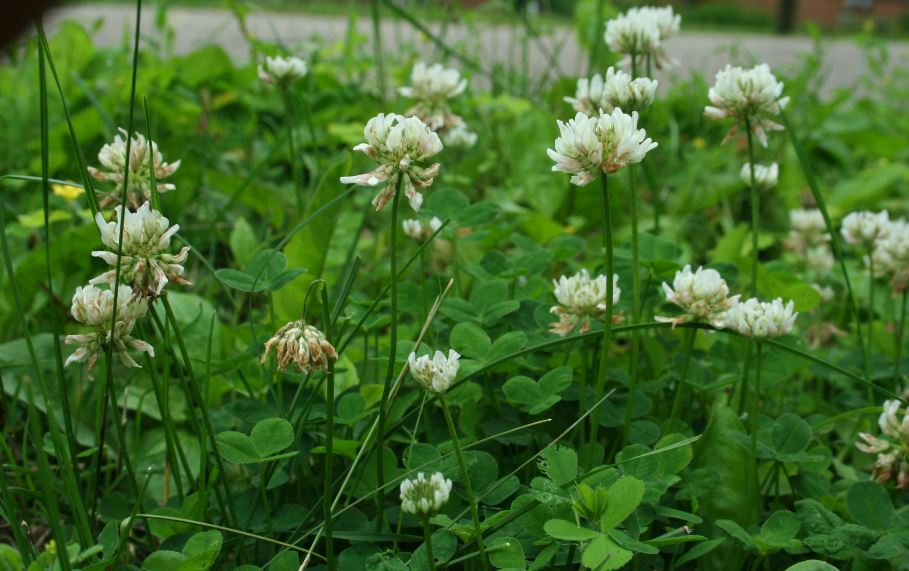
Introduced Dutch or white clover, Trifolium repens, is a convenient plant to see rhizomes. Its stem grows just above or below the soil, so it’s easy to pull up. This is the only stem the plant has. The vertical “shoots” are actually petioles, or leaf stalks, and scapes, structures that support clusters of flowers. Notice that the rhizome has nodes, but the petiole and scape do not. 

Two photos, the first showing a mass of clover with clusters of white flowers and the second showing a narrow, red clover rhizome.
A white clover colony spreads by rhizomes. They can grow quickly, forming patches. 


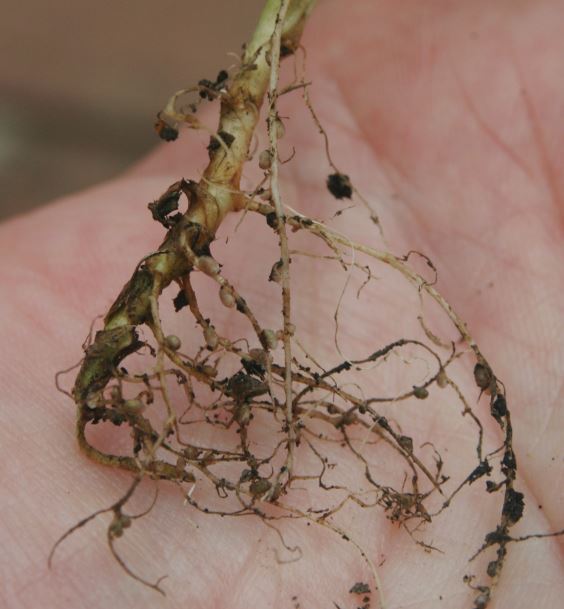
True roots will also come up, and they lack nodes, too. Some of them may have tiny nodules attached. These aren’t tubers, but rather small bodies containing nitrogen-fixing bacteria. The bacteria convert nitrogen gas in the air to a form the plant can use. For more information about that, see The Boon of Biological Nitrogen Fixation.


A white clover rhizome with roots bearing many small nodules.
A white clover rhizome and roots with nodules.

Wednesday, October 11, 2023

Flinging Spores and Fern ID

Sori on the back of a lady fern frond. Dozens of brown sporangia emerge from beneath the edge of a nearly translucent indusium.

The back of this lady fern frond (Athyrium filix-femina) is covered with sori, clusters of spore-forming bodies called sporangia. Each sorus holds dozens of them, all covered by a protective flap of tissue called an indusium. When a sporangium matures and dries, a line of cells over the top of the sporangium contracts, causing it to fling open and catapult its spores. You can watch it happen here in a sorus of an unidentified fern.

A spore print made by a lady fern frond. The spores are so small they look like dust. 

Unlike seeds, spores don’t contain embryonic plants. They’re little more than tiny packages of DNA that give rise to the next generation of ferns. They do this by first growing a small, heart-shaped prothallus, a body that produces egg and sperm cells. The flagellated sperm cells swim through a film of water to fertilize the egg cells, which then grow into the ferns we recognize. Because water is needed for this kind of reproduction, many ferns rely on damp or humid habitats.

A closeup of the back of a lady fern frond with a labeled sorus, sporangia and indusium.
Lady fern is identified in part by the shape of its sori. They are usually curved or
horseshoe-shaped. They appear in late summer and early fall.

A cluster of brown fertile fronds of ostrich fern. Their shapes resemble ostrich feathers.
Fertile fronds of ostrich fern.
Not all ferns have sori that look like those of lady fern. Some are located along the edges of the frond, some have indusia of different shapes or sizes, and some have no indusia at all. Other ferns, such as ostrich fern (Matteuccia struthiopteris) and sensitive fern (Onoclea sensibilis), produce spores on fronds specialized for that purpose – in other words, the whole frond is devoted to forming spores. For all these variations, timing is important. Sori and reproductive fronds (aka fertile fronds) may appear only at certain times of the year, and the appearance of sporangia and sori can vary depending on how old they are. 


Both reproductive and vegetative characteristics are helpful to identify a fern. Here are some resources to learn more about fern anatomy, biology and identification.

  • Ferns. U.S. Forest Service. This site may take a few tries to load.
  • Dichotomous Key to Ferns of Wisconsin, by Tim Gerber, UW-La Crosse.
  • Key to Fern Traits, by Areca Treon. This is a key to ferns in Cedar Creek Ecosystem Science Reserve near Bethel, MN.
  • Ferns of Minnesota, by Rolla Tryon. Illustrated by Wilma Monserud. University of Minnesota Press, 1980. ISBN 0-8166-0932-2.
  • Ferns and Lycophytes of Minnesota: The Complete Guide to Species Identification, by Welby R. Smith (author) and Richard Haug (photographer). University of Minnesota Press, 2023. ISBN 1517914663.

 For more information about lady fern, try these sites:

Saturday, August 19, 2023

Once Upon a Milkweed

A black and gray sweat bee walking on top of a group of pink swamp milkweed flowers.
A sweat bee (genus Lassioglossum) on swamp milkweed (Asclepias incarnata) is in a precarious position. 


Milkweeds are familiar to many as essential for Monarch butterflies, but there’s much more to their story. A close look at their flowers shows an intricate structure with a tricky way to snag insects – literally.

The flowers of swamp milkweed (Asclepias incarnata), like many other milkweeds, are composed of five reflexed petals, five upright hoods, and five narrow horns around a gynostegium, a central column of fused stamens and pistils. The bases of the hoods hold nectar, and between them are narrow slits bordered by two “guide rails.” Each slit leads to a chamber that contains the reproductive parts of the flower, including the stigma, the part that receives pollen. For that reason, it’s called the stigmatic chamber.

A group of swamp milkweed flowers with the petals, horns, hoods, gynostegium and stigmatic slits labeled.

What’s missing from the flowers are anthers shedding dust-like pollen grains. Unlike typical flowers, milkweeds don’t offer individual grains for insects to carry away. Instead, their pollen is packed into waxy sacs called pollinia. Each chamber holds two pollinia connected by a pair of arms and a central gland or corpusculum, Latin for “little body.” The whole structure, called a pollinarium, looks like a small pair of winged maple seeds.

Pollinia are rare. Only orchids also make them. The advantage of packing pollen grains together is that they can be carried as one unit to deliver hundreds of grains to the stigma of another flower. That improves the odds that every ovule in an ovary will be fertilized and develop into a seed. 

[Sidebar: In seed plants, ovules contain egg nuclei and develop into seeds. One or more ovules reside in an ovary, which sits at the base of a pistil, the “female” reproductive part. Above the ovary is a neck-like style and the stigma, the surface that receives pollen. Ovary walls develop into fruits.]

The challenge for milkweeds is to somehow get the pollinia out of the chamber and onto another flower. To accomplish this, milkweeds rely on bees, wasps, flies and butterflies as carriers. The insects visit the flowers to get nectar, and in the process, take the pollinia. And that’s where it gets tricky.

As an insect walks across the waxy surface of a milkweed flower, a leg or other body part can accidentally slip into one of the slits between the hoods. The corpusculum then catches its leg, forcing the insect to pull hard to get it out. Sometimes the insect doesn’t succeed, and it either leaves behind a leg or dies trying to get it loose. But if the insect can manage, it extracts its leg with the pollinarium attached. Then it’s off to another flower and perhaps another slip into a chamber, where the pollinia are deposited and the pollen can reach the stigma.

A bristly tarsus of a digger bee to which a dangling yellow pollinium is attached.
Pollinarium with dangling yellow pollinia on the tarsus (lowest leg segment) of a digger bee. 
Photo by Allan Smith-Pardo, Bees of the United States, USDA APHIS PPQ, Bugwood.org.

That’s a lot of effort, for both the insect and the plant. The reward for the insect, if it isn’t snagged forever in a milkweed flower, is a source of nectar that is almost pure sucrose, the same as in your sugar bowl. The reward for the plant, as mentioned above, is an abundant and directed source of pollen. No other plants but milkweeds can receive pollinia, so little pollen is lost on plants that can’t use it. Even a different milkweed species is unlikely to accept pollinia from, say, a swamp milkweed, because the size and shape of the receiving chamber may not fit the arriving pollinia. Hybrids are therefore uncommon.

To listen to an ecologist talk about milkweed pollination and why it’s so unusual (and cool!), see this video by Dr. Thomas Rosburg of Drake University for Iowa PBS.

To see milkweed pollination in action, see this video from the Master Gardeners of Northern Virginia (scroll down at the site) or another video from Monarch Butterfly USA. Some of the terms differ, but the process – and the pitfalls – are the same. 

To learn more about swamp milkweed in particular, see this page from Minnesota Wildflowers.


References

Minnesota Wildflowers

Illinois Wildflowers

Milkweed pollination biology. By Eric P. Eldredge, USDA NRCS. November 2015. 

Milkweed pollination: A series of fortunate events. By Chris Helzer in The Prairie Ecologist, January 2021. 

Wyatt, R. and Broyles, S. B. 1994. Ecology and evolution of reproduction in milkweeds. Annual Review of Ecology and Systematics 25: 423-441. https://www.jstor.org/stable/2097319


Wednesday, April 12, 2023

What Are Catkins -- and Why Does "Gesundheit" Come to Mind?

A branch of quaking aspen with several clusters of hanging, cylindrical, fuzzy catkins.
Catkins of quaking aspen, Populus tremuloides, began emerging in March in southern Minnesota. This photo was taken in mid-April.


Catkins, also called aments, are cylindrical, sometimes pendant clusters of inconspicuous flowers. They are typical of willows, aspens, poplars, birches, alders, hazelnuts and ironwood trees and shrubs. All these plants bloom in spring, often before leaves emerge, and most are wind pollinated. Willows are also insect pollinated and can be an important source of pollen and nectar for early-emerging insects, including those that later pollinate crops (1).

Catkins contain either male (pollen producing) or female (seed producing) flowers on the same or different plants. Ironwood (Ostrya virginiana), hazelnuts (Corylus spp.), birches (Betula spp.) and alders (Alnus spp.) have male and female catkins on the same plants, so they’re said to be monoecious (mon-EE-shus), which means “one house.”

In contrast, aspens and poplars (Populus spp.) have male and female catkins on different plants, so they’re dioecious (di-EE-shus), meaning “two houses.” Willows (Salix spp.) are also dioecious.

The emergence of catkins and the release of pollen marks not only the beginning of spring but also the start of allergy season. Wind-pollinated plants tend to produce abundant pollen because the grains could land anywhere – perhaps on a female flower of the same species, but maybe on those of a different species or even on no plant at all. Such as on you.  

Flurries of pollen may add to the misery for allergy sufferers, but for aspens, willows, and similar plants, they’re an insurance policy. The possibility of a next generation literally blows in the wind, so the more pollen, the better. "Gesundheit" for one, then, is good fortune for the other. 

Reference

1) Ostaff, D. P., Mosseler, A., Johns, R. C., Javorek, S., Klymko, J. and Ascher, J. S. 2015. Willows (Salix spp.) as pollen and nectar sources for sustaining fruit and berry pollinating insects. Can. J. Plant Sci. 95: 505[1]516. DOI:10.4141/CJPS-2014-339.


Tuesday, March 7, 2023

The Boon of Biological Nitrogen Fixation

A patch of white clover in bloom.
White Clover, Trifolium repens.


White Clover is so common and modest that it’s often ignored. It’s like background noise: always there but barely noticed, at least until it flowers. Beneath its ordinary appearance, though, is an extraordinary ability: It can capture atmospheric nitrogen, N2, and convert it to ammonia, NH3, a first step in making nitrogen usable.

Called biological nitrogen fixation, this process is billions of years old and vital to life as we know it. Although nitrogen gas composes about 78% of the atmosphere by volume, most living things can’t use it. We humans, for example, can’t simply take a deep breath and get the nitrogen we need. We don’t have the molecular machinery to do that.

But some kinds of bacteria do. They possess nitrogenase, a complex enzyme that can break the strong bonds in nitrogen molecules and attach the atoms to hydrogen, making ammonia. Ammonia then goes on to participate in other reactions that make proteins, DNA and other biomolecules. When these compounds decay, or when some of the captured nitrogen leaks into the soil, other plants absorb it. We eat these plants or the animals that graze on them to get our supply of nitrogen. We can’t live without it.

Clover and other legumes house nitrogen-fixing bacteria in nodules on their roots. This symbiosis is of mutual benefit: The plants receive nitrogen from the bacteria, and the bacteria receive energy and carbon compounds from the plants. The nodules also provide a low-oxygen environment for nitrogenase to work. A kind of hemoglobin called leghemoglobin scavenges oxygen that would otherwise disable the enzyme. At the same time, leghemoglobin provides oxygen for cell respiration, the set of reactions that produces the energy to drive nitrogen fixation and other processes.

The exposed roots of white clover showing many small nodules attached.
Nodules on the roots of White Clover hold bacteria that fix    
nitrogen.


Legumes are the primary biological nitrogen fixers, but a few plants in other families can do the same. Speckled Alder (Alnus incana), Silver Buffaloberry (Shepherdia argentea) and New Jersey Tea (Ceanothus americanus), for example, are non-legumes that also house nitrogen-fixing bacteria in root nodules. Called actinorhizal plants, they are mostly trees and shrubs from temperate regions. They are adapted to nutrient-poor soils, so some of them have been used to restore land degraded by mining, logging, wildfires or other disturbances.

Other fixers live freely in soil, or they live in close association with roots but not inside nodules. The latter includes bacteria that live in the rhizosphere (the near-root environment) of many grasses, including wheat and corn. Some researchers are trying to develop nodulating cereal crops that capture more of the nitrogen they need naturally instead of absorbing it from manufactured, energy-intensive fertilizer, which now supplies most of the nitrogen needed for agriculture. If they succeed, it could be part of the answer to mitigating climate change – and to feeding a hungry world.

Sources

Wagner, S. C. (2011) Biological Nitrogen Fixation. Nature Education Knowledge 3(10):15

Bernhard, A. (2010) The Nitrogen Cycle: Processes, Players, and Human Impact. Nature Education Knowledge 3(10):25

Diagne, N., Arumugam, K., Ngom, M., Nambiar-Veetil, M., Franche, C., Narayanan, K. K., & Laplaze, L. (2013). Use of Frankia and actinorhizal plants for degraded lands reclamation. BioMed Research International, 2013, 948258. https://doi.org/10.1155/2013/948258

Bakum, J. (2022) Biological nitrogen fixation and prospects for ecological intensification in cereal-based cropping systems. International Maize and Wheat Improvement Center (CIMMYT). 

Plant Profile: Common Elderberry

  Sambucus canadensis or Sambucus nigra subsp. canadensis Common elderberry growing on the edge of a cattail marsh. The largest inflorescenc...